Introduction
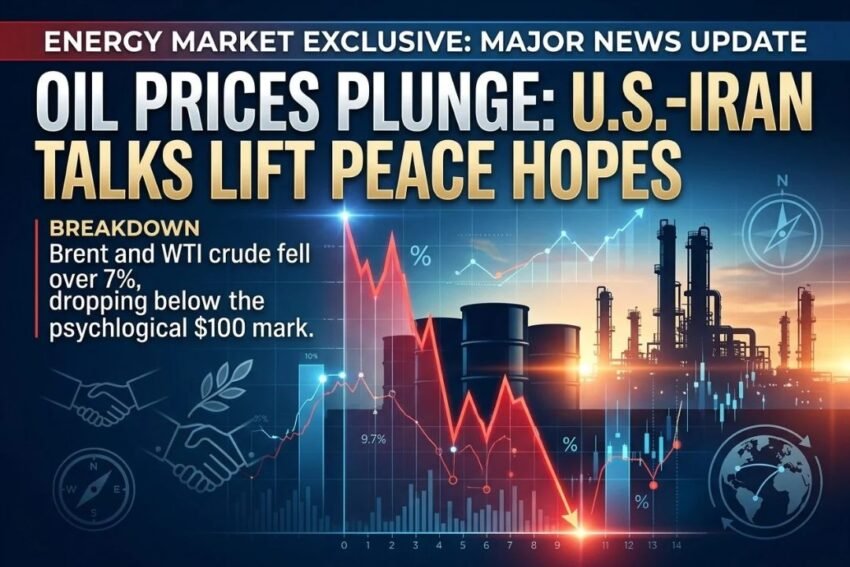
International oil markets experienced a sharp decline on Monday, November 2, 2026, as renewed diplomatic efforts involving the United States and Iran raised hopes of reducing tensions in the Middle East. The decline marked the biggest daily percentage drop in oil prices since July, reversing some of the significant gains recorded during October.
Investors reacted to reports of discussions between Iranian and Qatari officials aimed at finding a possible solution to the ongoing conflict. The prospect of a diplomatic breakthrough encouraged traders to reassess the risks surrounding oil production, exports, and transportation across the Persian Gulf.
The latest developments are particularly important because the Middle East remains one of the world’s most important energy-producing regions. Any disruption to oil production or shipping can have consequences for international fuel supplies, transportation expenses, and economic stability.
Although falling oil prices provided some relief to energy markets, uncertainty remains. Negotiations have not yet produced a final agreement, and concerns about shipping security and regional military activity continue to influence investor sentiment.
Oil Prices Record Their Biggest Daily Decline Since July
Crude oil prices fell significantly on Monday as investors responded to improving expectations surrounding US-Iran diplomatic discussions.
According to the Wall Street Journal, Brent crude futures declined 7.6% to settle at $104.77 per barrel, while US West Texas Intermediate (WTI) crude dropped 7.4% to $96.46 per barrel.
Both benchmarks recorded their steepest daily percentage declines since July 27.
The sharp movement came after a strong October performance, when international oil prices increased because of concerns about military escalation and possible interruptions to energy exports from the Gulf region.
Earlier on Monday, Reuters also reported that Brent crude had fallen nearly 4% during trading, while WTI experienced a similar decline. These earlier figures reflected intraday trading rather than the final settlement prices.
The sudden reversal demonstrates how quickly oil markets can respond to changing expectations about geopolitical developments.
Traders had previously included a significant geopolitical risk premium in crude prices because of uncertainty surrounding the conflict. Renewed diplomatic activity encouraged some investors to reduce those expectations.
However, the decline does not necessarily indicate that global oil supply problems have been resolved.
Iran Negotiations Raise Hopes of Reduced Oil Supply Disruptions
One of the biggest reasons behind the decline in oil prices was renewed diplomatic activity involving Iran and Qatar.
Iranian and Qatari officials reportedly held discussions over several days in Doha to explore possible arrangements for ending the conflict involving the United States and Israel.
The discussions were intended to maintain communication and create conditions for further negotiations between Washington and Tehran.
Iranian Foreign Minister Abbas Araqchi indicated that consultations with Qatari mediators were continuing.
The reports also suggested that Iranian negotiators left Doha without the departure being linked to a breakdown in discussions.
For international oil traders, these developments created optimism that the situation could move toward a diplomatic solution.
A successful agreement could reduce the risk of further attacks on energy infrastructure and improve the movement of oil tankers through important shipping routes.
However, negotiations remain complicated by disagreements involving regional security, military activity, and Iran’s broader international relations.
As a result, investors are watching diplomatic announcements carefully rather than assuming that an agreement is guaranteed.
Why the Middle East Conflict Has Affected Oil Markets
The Middle East plays a central role in global energy production.
Several major oil-producing countries are located in the region, and their exports supply important markets throughout Asia, Europe, and other parts of the world.
When military tensions increase, traders become concerned about possible interruptions to oil production and transportation.
Even the possibility of reduced exports can influence market prices because international energy markets depend on reliable supplies.
The conflict involving Iran has created uncertainty about shipping operations, energy infrastructure, and the future availability of crude oil.
These concerns helped support higher oil prices during October.
Now, expectations of further diplomatic discussions are reducing some of that immediate pressure.
Nevertheless, the market remains vulnerable to sudden changes if negotiations fail or military activity increases.
Strait of Hormuz Remains a Major Concern for Global Energy Supplies
The Strait of Hormuz is one of the most important shipping routes in the international oil industry.
Located between Iran and Oman, the narrow waterway connects the Persian Gulf with the Gulf of Oman and the Arabian Sea.
A substantial volume of internationally traded crude oil and petroleum products normally passes through this strategic route.
Countries such as Saudi Arabia, Iraq, Kuwait, Qatar, and the United Arab Emirates depend on regional shipping infrastructure to transport energy supplies to international customers.
Because of its strategic importance, any disruption to commercial traffic through the Strait of Hormuz can create significant concerns for oil markets.
Recent attacks on tankers have increased uncertainty surrounding shipping activity.
Shipping companies must consider security risks, insurance expenses, transportation schedules, and alternative routes.
If diplomatic negotiations produce a lasting agreement, confidence in regional shipping operations could improve.
However, restoring normal transportation conditions may take time, particularly if security concerns continue.
For this reason, the Strait of Hormuz remains one of the most closely monitored factors in the global oil market.
Brent Crude and WTI Prices Respond to Diplomatic Developments
Two major benchmarks help investors understand movements in international crude oil markets: Brent crude and West Texas Intermediate.
Both experienced substantial declines during Monday’s trading session.
Brent Crude Oil
Brent crude is an important international benchmark used to price oil produced in several regions around the world.
Its price is particularly sensitive to developments affecting international supplies and transportation from the Middle East.
The benchmark settled at $104.77 per barrel after falling 7.6% on Monday.
The decline reflected improving expectations about diplomacy and the possibility of reduced disruptions to international oil shipments.
Despite the selloff, Brent remained above $100 per barrel, indicating that significant supply concerns continued to affect the market.
West Texas Intermediate
West Texas Intermediate, commonly known as WTI, is the primary US crude oil benchmark.
Its price is influenced by American production, inventory levels, refinery activity, and international market conditions.
WTI settled at $96.46 per barrel, representing a daily decline of 7.4%.
Although the benchmark primarily reflects the North American oil market, developments involving Iran can influence its price because crude oil markets are closely connected.
The decline in both benchmarks indicates that investors were reassessing geopolitical risks across the wider energy market.
OPEC+ Maintains December Oil Production Targets
Another important development influencing oil prices involves OPEC+.
The organization includes members of the Organization of the Petroleum Exporting Countries and several other major oil-producing countries, including Russia.
OPEC+ plays an important role in international energy markets because its production decisions can influence the balance between global oil supply and demand.
On Sunday, November 1, the group decided to maintain its December production targets without additional changes.
The decision was largely in line with market expectations.
The production announcement is important because global oil supplies remain affected by disruptions connected to the Middle East conflict.
Even if diplomatic negotiations improve, restoring production and transportation to previous levels may take time.
OPEC+ members must also consider international demand, available production capacity, and the possibility of additional supply disruptions.
The group’s next important policy meeting is scheduled for November 29.
Investors will be watching that meeting for indications about production targets and the organization’s approach to the changing energy market.
Global Oil Inventories Face Pressure From Supply Disruptions
One of the most important concerns for the oil industry is the decline in global petroleum inventories.
The conflict has affected international energy shipments and contributed to a significant reduction in stored oil supplies.
According to reporting from Reuters, the chief executive of Abu Dhabi’s state-owned oil company ADNOC said the world had drawn down nearly one billion barrels from inventories since the war disrupted shipping through the Strait of Hormuz.
This reduction highlights the scale of pressure facing the global energy market.
Oil inventories are important because they provide a buffer when production or transportation is interrupted.
When stored supplies become lower, markets can become more sensitive to additional disruptions.
Even a temporary interruption in exports may have a stronger impact when available inventories are limited.
This is why some analysts remain cautious despite Monday’s substantial decline.
A diplomatic breakthrough could improve expectations, but rebuilding depleted inventories and restoring normal shipping activity would require additional time.
Goldman Sachs Warns That Oil Prices Could Rise Again
Despite the recent decline, financial analysts continue to highlight the possibility of further price increases.
Goldman Sachs raised its oil price forecasts while warning that continued supply disruptions could create additional pressure on international energy markets.
The bank outlined a scenario in which Brent crude could reach $140 per barrel in 2027 if oil production in the Gulf remains approximately 3.5 million barrels per day below its 2025 average.
This scenario reflects the potential consequences of prolonged supply shortages.
However, Goldman Sachs also indicated that a lasting agreement and faster recovery in oil supplies could produce a significantly different market outcome, with prices potentially moving toward the $60 range.
These contrasting scenarios demonstrate how strongly future oil prices depend on political developments and the restoration of energy supplies.
The latest decline may reflect improved expectations, but investors still face considerable uncertainty.
How Falling Oil Prices Could Affect Consumers
A decline in international crude oil prices can eventually influence fuel costs for consumers.
Crude oil is a major component in the production of gasoline, diesel, jet fuel, and other petroleum products.
When international oil prices decrease, refineries may benefit from lower raw material expenses.
However, retail fuel prices do not necessarily fall immediately.
Several additional factors determine the amount consumers pay at fuel stations.
These include:
- Government taxes and petroleum duties.
- Currency exchange rates.
- Refining and distribution expenses.
- Transportation and storage costs.
- Local fuel pricing policies.
If the decline continues, countries that depend heavily on imported petroleum could experience some relief from international energy costs.
Lower oil import expenses could also help reduce pressure on government budgets and foreign currency reserves.
However, the impact will depend on the duration of the price decline and developments in international markets.
Could Lower Oil Prices Reduce Global Inflation?
Oil prices have an important relationship with inflation because petroleum products are used throughout the global economy.
Higher energy costs can increase expenses for transportation companies, manufacturers, airlines, shipping businesses, and agricultural producers.
These additional expenses can eventually affect the prices of products and services.
A sustained decline in crude oil prices could therefore help reduce some inflationary pressures.
For example, lower diesel prices may reduce transportation expenses, while cheaper petroleum-based energy inputs could benefit certain industrial sectors.
Consumers may also benefit if lower wholesale energy costs eventually translate into reduced fuel and transportation prices.
Nevertheless, oil is only one component of inflation.
Food prices, housing expenses, wages, interest rates, and currency movements also play important roles.
Therefore, the latest decline should not automatically be interpreted as the beginning of a broader reduction in global inflation.
What Investors Should Watch in the Coming Days
The direction of oil prices will depend on several important developments during the coming weeks.
1. Further US-Iran Diplomatic Discussions
Additional meetings or official announcements could influence investor confidence.
A meaningful agreement may reduce concerns about supply interruptions and encourage further price declines.
2. Shipping Conditions in the Strait of Hormuz
The movement of commercial oil tankers will remain an important indicator of regional stability.
Any improvement in shipping activity could support expectations of stronger oil supplies.
3. OPEC+ Production Decisions
The November 29 meeting could provide important information about future production targets.
Investors will examine whether the group plans to maintain its current approach or introduce changes.
4. Global Oil Demand
Economic conditions in major consuming countries will also influence prices.
Demand from China, India, the United States, and Europe remains important for the international energy market.
5. Military and Political Developments
Any renewed escalation involving Iran or other regional actors could quickly change investor expectations.
This means that oil traders must continue monitoring geopolitical developments alongside traditional supply and demand indicators.
Conclusion
Oil prices experienced their biggest daily decline since July on November 2, 2026, as renewed diplomatic efforts involving Iran and Qatar raised expectations of reduced tensions in the Middle East.
Brent crude fell 7.6% to settle at $104.77 per barrel, while West Texas Intermediate declined 7.4% to $96.46.
The decline reflected growing optimism that negotiations could reduce the possibility of further supply disruptions and improve confidence in international oil transportation.
However, the global energy market continues to face significant challenges. Disruptions around the Strait of Hormuz, declining oil inventories, and uncertainty surrounding regional security remain important concerns.
OPEC+ production policies and global energy demand will also influence the direction of crude oil prices.
For consumers, a sustained decline could eventually provide relief from high fuel expenses. For investors and energy companies, however, the latest developments demonstrate the importance of monitoring geopolitical risks and international supply conditions.
Ultimately, the future of oil prices will depend on whether diplomatic efforts lead to a lasting reduction in tensions and a meaningful recovery in global energy supplies.