
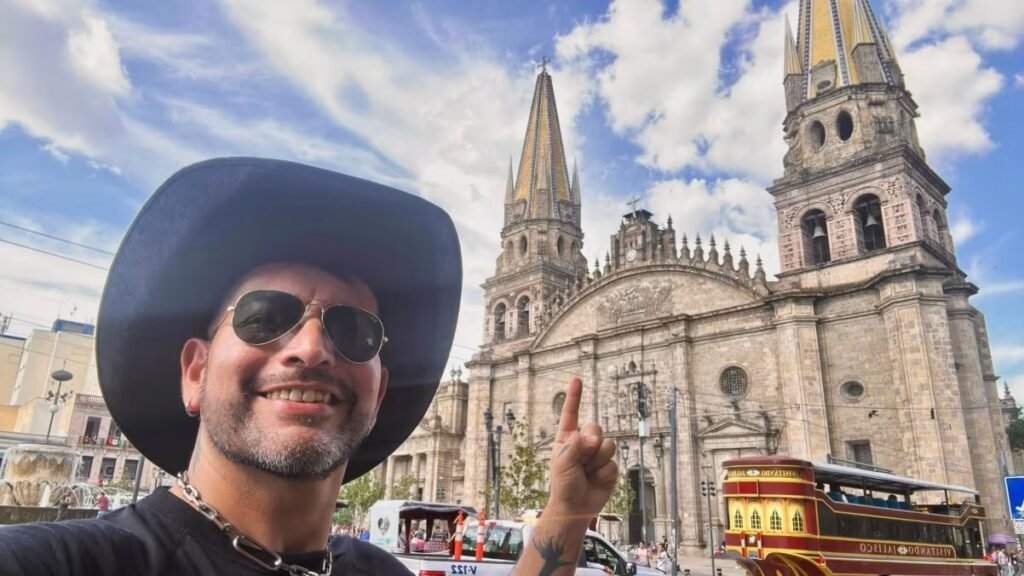
The phone call came nine months after Hector “Alessandro” Negrete had relocated to Guadalajara, Mexico, trying to start a new life with no more burden of fear and uncertainty, as was the case in Los Angeles.
“Look, do you have an invoice addressed to border patrol?” his former roommate told him in the evening, around 8 p.m., when he was preparing his meals in the kitchen after a visit to the gym. He sought legal advice from his lawyer, while his roommate opened the envelope.
“What is this, vecino?” asked his roommate, calling him “neighbor.”
There was a seven-digit figure inside. It turned out that Negrete owed $1.8 million to the Department of Homeland Security, the letter stated.
“Jesus Christ,” Negrete recalls thinking. Initially, Negrete assumed that the letter was a scam due to confusion. He got on a FaceTime video call with his roommate to cope with his shock.
“I’m going to lose my money, I’m going to lose my job,” he said to himself later.
The letter sent to him at an old address, where he pays US taxes, said that Negrete was required to pay a $1,820,352 civil penalty for violating the deportation order made in 2009, a copy of the notice obtained by CNN shows.
Negrete was only three months old when he, along with his parents, migrated to California after escaping the violence in his native city of Mexico.
The man stayed in America for more than 15 years even after getting a final order of deportation from the government, trying to get legal immigration status all along.
However, life became impossible for the man after Donald Trump reclaimed presidency in 2025.
“It is no fun to be caged up in Los Angeles… It was not my dream of the future,” Negrete told CNN.
Early last year, Negrete made up his mind about leaving. Negrete left for Tijuana, Mexico, by car and then flew to Guadalajara two days later, he said.
“I actually believed that once I was out of the country, I was done,” Negrete said.
The story of Negrete is typical of thousands of others. He is one of over 100,000 undocumented immigrants who were fined by the Department of Homeland Security since the start of the second administration of Trump until mid-July. According to the DHS, these fines add up to over $84 billion. As of July 16, DHS collected more than $1.2 million, the DHS reported to CNN on Monday.
If you have been issued a final order of removal and do not leave voluntarily, you could be fined $998 per day by DHS, but the fines are excused if you leave the country using the CBP Home app, as stated in a news release issued in July by the agency. You will get a free ride back to your home country and “exit bonus of $2,600.”
“Our message is simple: those here illegally need to get out of the country or pay the price including fines,” DHS told CNN in a statement.
Charles Moore, Senior Attorney at public interest law group Public Justice, one of the plaintiffs that have sued the U.S. government in order to stop imposition of the immigration fines said that “DHS is fining people who might be meeting the criteria for remaining in the country.”
“This administration is using these fines as a weapon against immigrants,” Moore added.
The federal government has stated that the fine program was sanctioned by the statute enacted by the Congress almost three decades ago and was therefore legal.
“An alien’s decision to stay in the United States in order to avail other immigration relief measures is not a defense under the statutes,” the government wrote in a January court filing.
When contacted by CNN for more details, DHS referred it to the Treasury and Justice Departments.
Negrete, along with his attorneys, twice offered proof that he resided in Mexico, but more documents were required from him, he and his lawyer Marissa Montes said. Negrete, who works remotely for an American-based international nonprofit organization combating age discrimination, is now afraid that his income in the US would be targeted by the government.
The ‘in-between space’
Negrete, who was born in Mexico in 1982, moved to the US with his family first to South Los Angeles and then to Los Angeles’ east side in Boyle Heights.
Negrete spent one month in Mexico at age 6. On the way back to the United States, the lady employed to bring him across the border kept him captive for over a week and demanded extra money from his family, according to Negrete. He claimed to have been tied inside the vehicle and locked at her place.
“At the end of the second day, I stopped crying so much because at that young age, maybe this was my new life,” Negrete added.
Negrete found out that he was undocumented only after graduating from high school, Negrete explained.
According to Negrete, he was offered admission to the University of California, Berkeley, but realized he didn’t have a Social Security number while applying for scholarships.
“Remember, I asked my mom, you know, ‘Hey, where is my Social?’ … It was just total confusion.”
Not being able to attend college, he started working to support his mother financially.
“I had been working hard all my life up until that point, and I couldn’t do anything. I couldn’t attend college,” Negrete said. “And I couldn’t figure out how to be angry because I couldn’t figure out who to be angry with.”
Negrete said he constantly tried to obtain legal status: first, through his father, who gained legal permanent residency in the country by getting married to a US citizen. However, this attempt did not prove to be fruitful because he was overlooked by his father on one of the immigration forms, he said. He could not apply for DACA in 2012 due to a DUI charge he got in 2008, but Montes managed to expunge his record, she told CNN. He applied for DACA before it was paused under the Trump administration in 2017.
At the time, undocumented status was approached via “shame or secrecy,” he remembers.
Later in life, Negrete came to be open about his status and got involved in the advocacy of immigrants’ rights and social justice. He was a member of the neighborhood council and considered himself a “Dreamer” without ever obtaining DACA status.
“Being able to tell my story from a position of resilience rather than fear was something I really had to do,” Negrete said.
Negrete carved out a career in the nonprofit and philanthropy sectors while also coming out as an undocumented queer community activist.
Negrete began contemplating leaving the US during his first term under Trump but decided to stay after his mother was diagnosed with cancer late in 2017.
But then came the second Trump administration. Negrete had lost his job and made efforts at saving some money but realized he could no longer afford to remain in the US anymore. He did not wish to spend four years in hiding or to live with uncertainty regarding his deportation status, as he said.
“More than anything it wasn’t fear of deportation; it was that in-between,” he said.
By then, he was already making plans to leave the US, as things got worse between immigration enforcement and protestors in Los Angeles in June 2025. He basically stayed at home throughout the summer because he feared going to the gym or doing anything else. After that, he started to say goodbye.
“I did not want to live in a cage,” he said.
The ‘rebirth’
Before leaving, Negrete took part in one last softball tournament in Sacramento. The week before, he organized a yard sale and farewell party at which friends purchased the majority of his items – including his horror movie collection – as mementos.
Negrete participated in one last softball tournament before he left the country.
Negrete participated in one last softball tournament before he left the country. Courtesy Hector Negrete
The visitors received cards with the message: “A new home, a different door, but the same key.”
Several months before leaving, Negrete conveyed the same message through a “love letter” on Substack.
“After 40 years of living in Los Angeles, a city that shaped me, that made me stronger, ak, I’ve decided to repatriate politically back to Mexico,” he wrote.
Negrete packed one big suitcase with clothes and another one with his dog’s things. According to Negrete, he left Los Angeles on September 4, 2025, driving for three and a half hours via Interstate 5 to cross the border into Tijuana.
En el camino, Negrete y su grupo se detuvieron en una playa para realizar un rito espiritual. Se dedicaron a conversar durante el resto del trayecto y uno de sus amigos pidió, “No está muy tarde, podemos volver atrás,” recuerda Negrete.
Negrete dijo que hizo todo lo posible por “aguantar” pero esa noche en Tijuana terminó llorando al ver un vídeo conmovedor que su grupo le hizo, “al que amorosamente llamaban Ale”. Le mostraron fotos y videos con mensajes de despedida a “el pegamento de nuestro grupo.”
Al día siguiente tomó un vuelo de sólo ida hacia Guadalajara, Negrete recuerda, nervioso mientras más hacia México se alejaba.
“¿Qué estoy haciendo dejando esta comodidad incomoda?”, recuerda que se preguntaba Negrete. “Sus amigos me dejaron como si fuera universitario.”
Pero el shock cultural llegó de inmediato: A pesar de que era el mejor hablante de español entre su círculo de amigos en los EEUU, a Negrete le costó al principio entender el dialecto de Guadalajara, reconoció bromeando. Lo mismo con la casa: Tuvo que hacer un largo proceso, que duró cuatro meses, para conseguir su tarjeta de identificación y tax number en México.
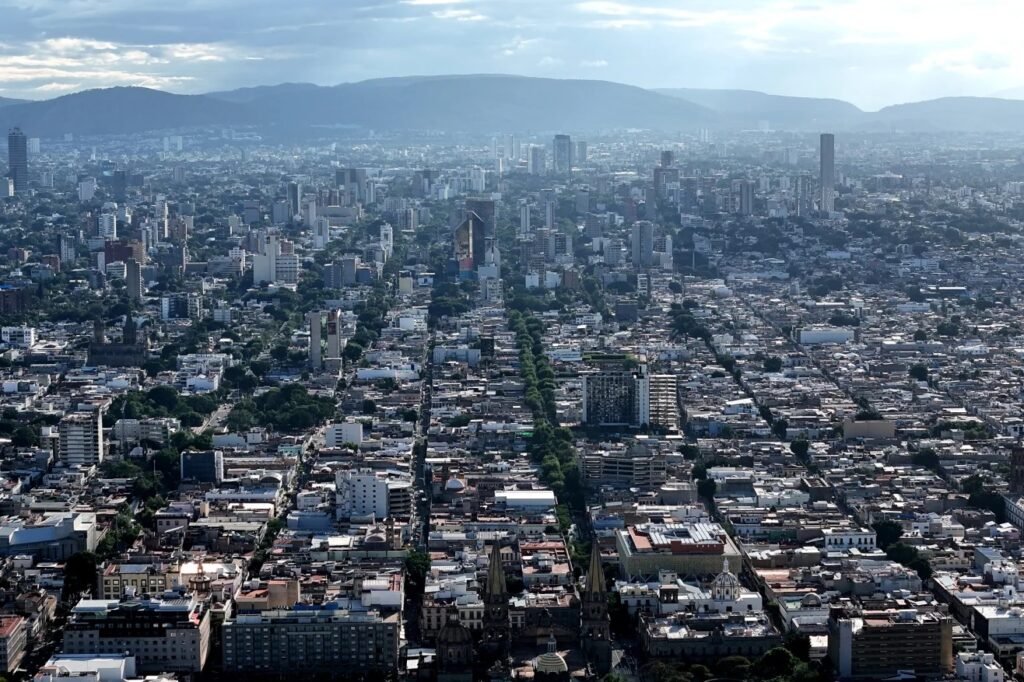
By January, life had come full circle in terms of routine. At workdays, Negrete worked, went to the gym, and walked his dog. He spent the weekends hiking, going to dog parks, and sightseeing in Guadalajara with his new friends.
He admitted to feeling anxious in regard to law enforcement. At first, seeing the police evoked the sense of insecurity conditioned by his experience of life in America without status. Later, however, he started to feel more secure in Mexico.
“I’m like, wait, I’m fine. I’m good,” he said.
However, in Los Angeles, his old life, that was meant to be left behind almost a year ago, reappeared in the form of an enormous fine.
The May 5 notice of fine references to Immigration and Nationality Act Section 274D(a) that gives the Department of Homeland Security the right to fine all non-citizens for willfully failing or refusing to leave the US after being ordered to do so.
The appeal
Negrete’s legal representatives appealed twice, but the Department of Homeland Security rejected the appeal and asked for more information, as per the lawyer and the notice viewed by CNN.
Negrete explained that his lawyers had immediately reacted to the first letter, just making it to the 15-day limit to appeal.
The appeal was filed on May 20 and was denied by the government on June 2, Negrete’s lawyers said. The next day, the government sent an invoice with the fine, giving Negrete 10 days to appeal by email. He appealed on June 12, offering more proof of his residence in Mexico, which the DHS told him did not have enough proof.
The fact that Negrete drove into Tijuana instead of taking a flight straight from Los Angeles made it difficult to document his departure, Montes said. His lawyers say that they submitted information proving that he left the country: declarations of a friend and a reporter, a lease agreement in Guadalajara, domestic plane tickets within Mexico, an article about his departure and his Mexican identification papers.
Now, his legal team is preparing another submission which will include a passport stamp from another country.
The department also requested him to register his travel via the CBP Home app; however, according to Negrete, he has not yet done so due to worries about how it would be interpreted.
According to DHS, in the July announcement, by registering via the CBP Home app, “illegal aliens earn forgiveness for any civil fines or penalties for failing to depart the country.”
However, in July, two U.S. senators wrote a letter to the administration requesting to end the fines, arguing that they have “abused” their powers granted under the Illegal Immigration Reform and Immigration Responsibility Act “in an effort to frighten immigrants – many of whom are trying to get a green card or who have maintained their lawful presence in the United States for decades.”
It gave him an opportunity to go out, think about buying land, which was not possible for him when he lived in Los Angeles.
However, Negrete and Montes strongly advise undocumented immigrants who consider going out of the country to speak to an immigration attorney first and explore all possible options before doing so.
Negrete’s recommendation to other undocumented immigrants is: “Talk to an attorney…Don’t do it like I did”.
The list of what Negrete misses about LA goes on endlessly: his “chosen family,” playing on his softball team, running with the Boyle Heights Bridge Runners on Wednesdays and going out at weekends.
“But I don’t miss living under persecution,” he said.
