Elon Musk Envisions Massive Growth for SpaceX’s Starlink Amid AI and Robotics Surge
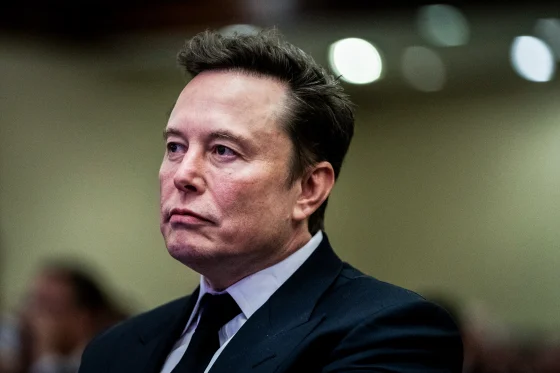
NEW YORK, August 10, 2026: Elon Musk is forecasting enormous growth for SpaceX’s Starlink satellite internet business as artificial intelligence, robotics and connected devices drive demand for high-bandwidth connectivity around the world.
Speaking during SpaceX’s first earnings call as a publicly traded company, Musk said Starlink could eventually capture a majority of global internet traffic and generate more than $1 trillion in annual revenue. The ambitious projection reflects his view that satellite connectivity wil
l become increasingly important as AI-powered machines and robots become more widespread.
Starlink is already SpaceX’s largest revenue-generating business. The company reported quarterly revenue of $7.8 billion for the period ended June 30, with Starlink accounting for more than half of total sales. The satellite business generated about $4.29 billion during the quarter, while its subscriber base reached approximately 12 million worldwide.
AI and robotics could drive connectivity demand
Musk’s long-term vision is based partly on the rapid development of AI-powered vehicles and robots.
He has argued that autonomous vehicles and humanoid robots will require continuous, high-speed connectivity to exchange data and access cloud-based computing resources. As the number of such machines grows, the amount of internet traffic they generate could rise dramatically.
Tesla’s autonomous vehicles and Optimus humanoid robots are central to this outlook. SpaceX President Gwynne Shotwell has also indicated that AI-enabled vehicles and robots could significantly increase demand for Starlink connectivity.
The argument represents a shift in how satellite internet could be used. Rather than serving primarily as a broadband alternative for households and businesses, Starlink could increasingly become connectivity infrastructure for machines operating across large geographic areas.
Starlink already expanding rapidly
The scale of Starlink’s current growth provides some support for Musk’s projections.
SpaceX said Starlink revenue increased 66% year over year in the latest quarter, while its subscriber base doubled to 12 million. Enterprise and government demand has also been growing, with revenue from those customers increasing substantially.
The company plans to accelerate the deployment of next-generation Starlink V3 satellites. SpaceX has said it intends to launch at least 1,000 V3 satellites within a year, with the new spacecraft designed to provide substantially greater capacity than earlier generations.
The next-generation network is expected to be important if SpaceX is to support the enormous increase in traffic envisioned by Musk.
A trillion-dollar revenue ambition
Musk’s projection that Starlink could eventually generate more than $1 trillion in annual revenue represents one of the most aggressive forecasts in the company’s long-term strategy.
SpaceX is already targeting a $100 billion annual revenue run rate by the end of 2026. The company’s overall revenue nearly doubled year over year to $7.8 billion in the latest quarter, driven by growth in both Starlink and its expanding AI operations.
Musk has suggested that Starlink could ultimately account for a majority of the world’s internet traffic. Achieving such a position would require enormous expansion in satellite capacity, ground infrastructure and customer adoption, as well as regulatory approvals across many countries.
Heavy investment required
The ambitious expansion comes with significant costs.
SpaceX’s capital expenditures surged to approximately $18 billion during the quarter, largely because of investments in artificial intelligence infrastructure and data centers. The company spent about $15.8 billion on capital projects during the second quarter alone.
The spending highlights the broader strategy behind Musk’s vision. SpaceX is not relying solely on satellite subscriptions for growth. The company is simultaneously investing heavily in AI computing infrastructure, next-generation spacecraft and launch technology.
The strategy could create synergies between the businesses, with Starlink providing connectivity while SpaceX’s AI operations create additional demand for computing and communications infrastructure.
Challenges remain
Despite the optimism, the scale of Musk’s forecast presents substantial challenges.
Starlink needs to deploy thousands of additional satellites to increase network capacity. That expansion depends heavily on SpaceX’s ability to launch spacecraft rapidly and economically, while the company must also navigate regulatory restrictions in different markets.
The service faces competition from traditional telecommunications companies as well as other satellite connectivity providers.
SpaceX must also maintain a balance between expanding its customer base and keeping the service affordable. Starlink’s average revenue per subscriber declined in the latest quarter as the company expanded internationally and offered lower-cost plans in some markets.
SpaceX’s strategy broadens beyond rockets
Musk’s latest projections illustrate how SpaceX is increasingly positioning itself as more than a rocket company.
Starlink provides the recurring revenue base, while launch technology enables the deployment of additional satellites. AI and robotics create potential new sources of demand, while SpaceX’s investments in computing infrastructure could connect the company’s different businesses.
If AI-powered machines become widespread, Musk believes connectivity could become an essential part of their operation, creating a market far larger than today’s consumer satellite internet business.
For now, the $1 trillion Starlink revenue vision remains a long-term ambition rather than a near-term forecast. But SpaceX’s rapid growth, expanding subscriber base and aggressive investment in satellite and AI infrastructure show that Musk is preparing the company for a dramatically larger role in the global communications and technology markets.