Kosovo PM Egged in Parliament as Political Crisis Spirals
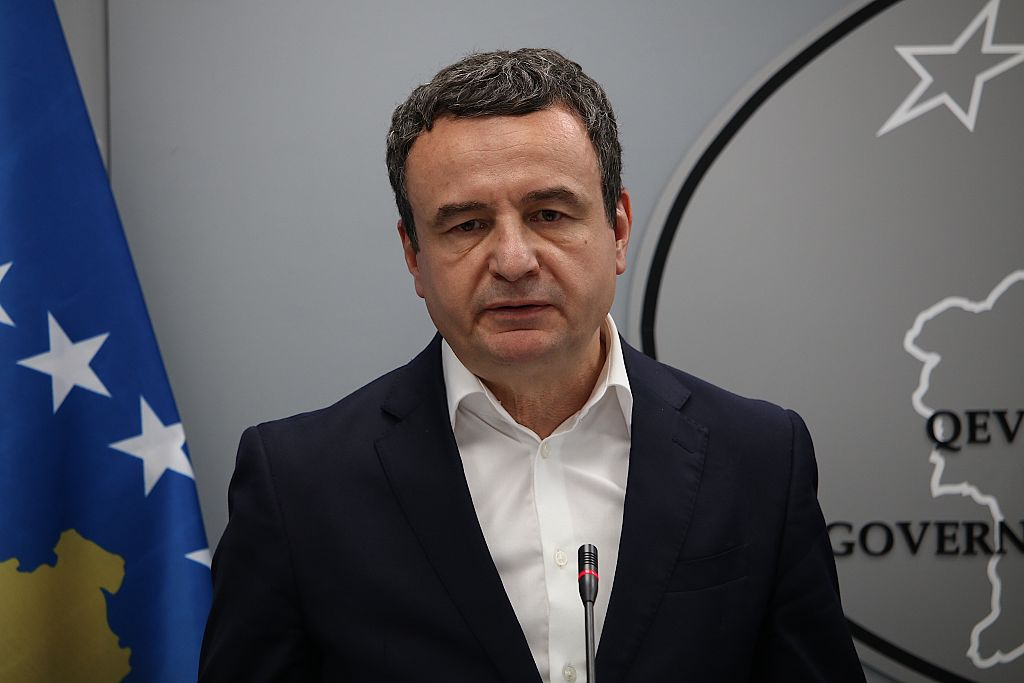
PRISTINA, August 10, 2026: Kosovo’s parliament was suspended after an opposition lawmaker threw eggs at caretaker Prime Minister Albin Kurti during a tense session, underscoring the deepening political crisis that has left the country facing the prospect of another snap election.
The confrontation took place on Saturday as lawmakers gathered for a crucial parliamentary session. Opposition MP Time Kadrijaj threw several eggs toward Kurti after the prime minister asked for additional time to continue negotiations with political parties over the election of a new president.
The incident brought proceedings to an abrupt halt. Parliamentary security moved to protect Kurti while the session was suspended and the live broadcast was cut.
Kadrijaj, a member of the Alliance for the Future of Kosovo, shouted accusations at Kurti as she threw the eggs. The dramatic confrontation reflected the increasingly bitter divisions between Kosovo’s governing camp and opposition parties.
Kurti, who is serving as caretaker prime minister, appeared largely unfazed by the incident. He said he was prepared to accept such confrontations if they were the price of continuing political dialogue and efforts to resolve the crisis.
Political deadlock deepens
Kosovo has been struggling with political instability following parliamentary elections held in June. Kurti’s Vetëvendosje party emerged as the largest political force but failed to secure enough support to govern alone.
The party won 53 seats in the 120-member parliament, leaving it short of the 61 votes required for a parliamentary majority. The Democratic League of Kosovo won 18 seats, while the Democratic Party of Kosovo secured 22.
Kurti has been seeking support from other parties to reach the necessary majority and break the political impasse. Negotiations have so far failed to produce a decisive agreement.
The latest dispute centers on the election of a new president. Kurti told lawmakers that consultations were continuing and that an agreement had not yet been reached. He requested additional time in an effort to prevent the country from being pushed into another election.
Opposition lawmakers have accused the government of prolonging the political stalemate and have expressed growing frustration with the lack of progress.
Another election possible
The continuing deadlock has raised the possibility of yet another parliamentary election, adding to a period of repeated political uncertainty in one of Europe’s youngest democracies.
Kosovo has already experienced multiple elections and prolonged institutional disputes in recent years. Political disagreements have repeatedly prevented lawmakers from forming stable institutions, creating uncertainty for the government and the country’s wider decision-making process.
The latest confrontation in parliament has therefore become a symbol of a broader crisis rather than an isolated incident.
For Kurti, the challenge is to secure enough political support to establish functioning institutions while avoiding another election that could further prolong the uncertainty.
The opposition, meanwhile, appears increasingly unwilling to give the caretaker government more time without concrete progress toward resolving the institutional deadlock.
Pressure mounts on political leaders
The political crisis comes at a sensitive time for Kosovo, where stable institutions are important not only for domestic governance but also for the country’s broader European aspirations and relations with international partners.
The parliamentary confrontation demonstrates how far political tensions have escalated. What began as a disagreement over parliamentary procedures and political negotiations has increasingly spilled into disruptive and highly confrontational scenes inside the country’s legislature.
The immediate priority for Kosovo’s political leaders is now to restore parliamentary functioning and find a constitutional path toward stable government.
If negotiations fail, however, the country could once again head toward the ballot box.
The egg-throwing incident may have been unusual, but it highlighted a much more serious problem: Kosovo’s political institutions remain deeply divided, and there is still no clear agreement on how to end the latest crisis.