
Can Leaders Ever Reform Prisons Without Playing Politics? Four Things Andy Burnham Could Do
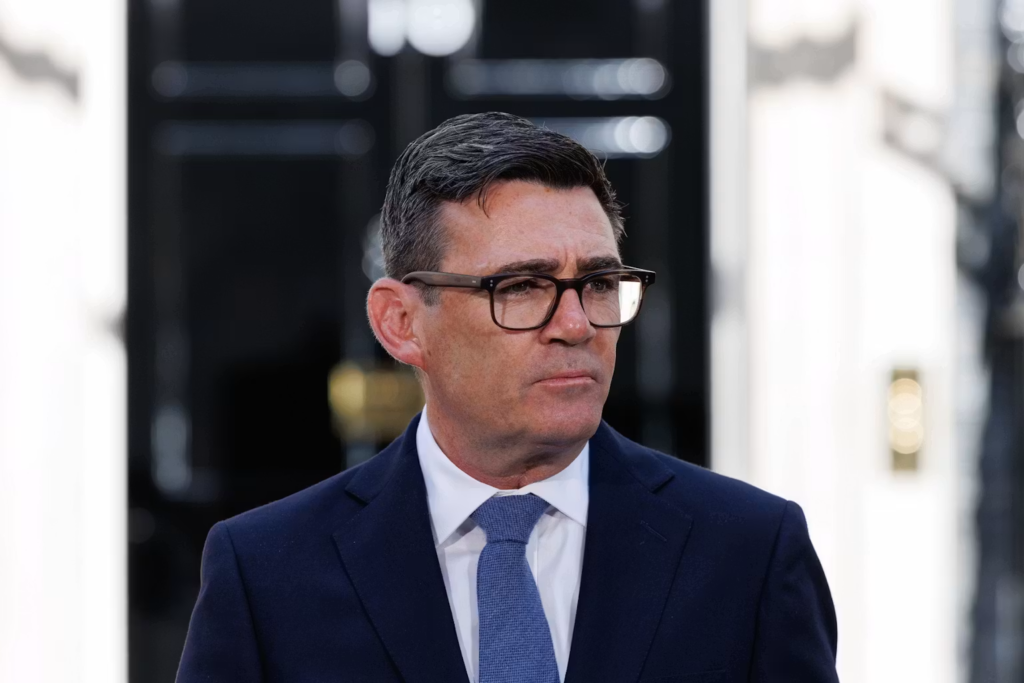
LONDON, August 10, 2026: Britain’s prison crisis presents Prime Minister Andy Burnham with one of the most difficult tests of his new government: how to reform a system under severe pressure while maintaining public confidence in criminal justice.
The challenge is particularly difficult because prison policy is rarely separated from politics. Decisions over sentencing, early release, prison capacity and rehabilitation can quickly become politically charged, especially when individual cases attract widespread public attention.
Burnham has already signalled that public safety will be a central priority. His government has paused the planned September expansion of the early-release arrangements, which were expected to affect around 6,000 prisoners under changes introduced by the new Sentencing Act. The decision followed concerns over the potential release of offenders whose cases have generated intense public and political debate.
But a pause can only provide temporary relief. The deeper problem is that England and Wales need a sustainable approach to prisons that addresses overcrowding, rehabilitation, sentencing and the causes of reoffending rather than repeatedly relying on emergency measures.
1. Build a long-term prison strategy
The first step would be to move the debate away from short-term arguments about how many prisoners should be released and toward a comprehensive plan for the prison system.
Britain’s prison population has continued to place pressure on available capacity, while ageing infrastructure, staffing problems and limited resources have made it increasingly difficult for prisons to provide effective rehabilitation.
A long-term strategy would need to establish how many prison places the country actually requires, what types of offenders should receive custodial sentences and how prisons should be designed to reduce reoffending.
Expanding the number of cells alone would not solve the problem. Without changes to sentencing and rehabilitation, additional capacity could eventually become another temporary solution to a structural problem.
2. Separate public safety from political point-scoring
Prison reform becomes particularly difficult when individual cases are used to define the entire policy debate.
Any government has a responsibility to protect the public and take the concerns of victims seriously. At the same time, criminal justice policy cannot be built entirely around the most emotionally powerful individual cases.
Burnham could attempt to establish a more evidence-based approach in which decisions about sentencing and release are assessed according to risk, rehabilitation and public protection.
That would require ministers to explain difficult decisions openly rather than allowing opponents to define the debate through isolated cases.
It would also mean accepting that reform does not necessarily mean being soft on crime. Effective rehabilitation, supervision and intervention can be central to protecting the public when they reduce the likelihood of further offending.
3. Make rehabilitation a core measure of success
A prison system that simply confines offenders without reducing reoffending can become an expensive cycle.
Burnham could therefore put rehabilitation at the centre of prison policy, linking custody more closely with education, employment, mental health support, addiction treatment and stable accommodation after release.
The objective should be to ensure that prisoners leave custody with a realistic opportunity to live lawfully and independently.
That requires continuity between prison and the community. Rehabilitation efforts can lose much of their value if a prisoner receives support inside prison but returns to homelessness, unemployment or untreated addiction immediately after release.
A stronger system would therefore involve prisons, probation services, local authorities, health providers and employers working together rather than operating as separate institutions.
4. Give local communities a greater role
One of Burnham’s central political arguments has been that decisions are often better made closer to the people affected by them. His experience in Greater Manchester has led him to champion cooperation between local government, public services, businesses and community organisations.
That approach could also inform criminal justice reform.
Local authorities and regional leaders are often better placed to understand the housing, employment, health and social problems that contribute to offending. Giving them a greater role in rehabilitation and resettlement could help prevent former prisoners from returning to the circumstances that contributed to their offending.
Such an approach would not mean removing responsibility from the national prison service. Instead, it would create stronger links between prisons and the communities to which prisoners eventually return.
The political test
The biggest challenge for Burnham may be maintaining public confidence while pursuing reforms whose benefits may take years to become visible.
Prison reform rarely produces an immediate political reward. Building rehabilitation programmes, improving probation and reducing reoffending are long-term projects, while a single high-profile crime can dominate the political debate overnight.
Burnham has argued for a style of politics based on problem-solving rather than point-scoring. His approach to the prison crisis will provide an early test of whether that philosophy can survive the pressures of national government.
The answer may lie in refusing to choose between public safety and reform. A functioning prison system needs both.
If Burnham can create a strategy that combines sufficient prison capacity with credible sentencing, effective rehabilitation and stronger community support, he could begin addressing the causes of the crisis rather than repeatedly managing its consequences.
But achieving that will require political courage. Prison reform is unlikely to be free of politics. The more realistic goal is to make criminal justice policy less dependent on political headlines and more focused on the long-term safety of the public.