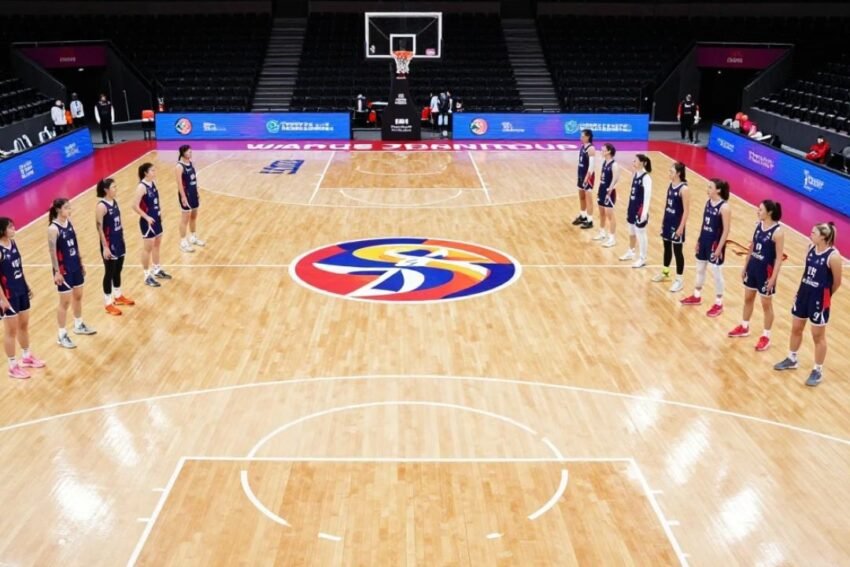
The FIBA Women’s Basketball World Cup 2026 is bringing the best women’s basketball players in the world together for one of the biggest international sporting events of the year. The tournament is being played in Berlin, Germany, from September 4 to September 13, 2026, with 16 national teams competing for the world championship.
This edition is particularly significant because the tournament has expanded from 12 teams to 16, giving more countries an opportunity to compete on the biggest stage. The competition also features several highly anticipated matchups, experienced international stars and a new generation of players making their mark in senior World Cup basketball.
The United States enters the tournament as the defending powerhouse, but teams such as France, Spain, Belgium and Australia are expected to provide serious competition. With the group stage already underway, basketball fans around the world are following the FIBA Women’s Basketball World Cup 2026 schedule, teams, results, standings and latest updates.
What Is the FIBA Women’s Basketball World Cup 2026?
The FIBA Women’s Basketball World Cup is the premier international tournament in women’s basketball, organized by FIBA, the global governing body for the sport.
The 2026 tournament is taking place in Berlin, Germany, and runs for 10 days from September 4 through September 13. A total of 16 teams are competing across four groups, with 36 games scheduled throughout the competition.
The expansion to 16 teams is one of the major changes for the 2026 edition. It reflects the rapid growth and increasing competitiveness of women’s basketball around the world.
Unlike a simple knockout tournament, the competition begins with a group phase before moving into qualification games and the final knockout rounds.
FIBA Women’s Basketball World Cup 2026 Teams
Sixteen national teams qualified for the 2026 FIBA Women’s Basketball World Cup. They have been divided into four groups of four teams each.
Group A
- Japan
- Spain
- Germany
- Mali
Group A contains a mixture of experience, European strength and Asian basketball quality. Spain is one of the tournament’s established contenders, while host nation Germany will have the advantage of playing in front of a home crowd.
Japan brings a fast and technical style, while Mali represents the growing strength of African women’s basketball.
Group B
- Hungary
- Korea
- Nigeria
- France
France is one of the strongest teams in Group B and enters the tournament with significant international experience. Nigeria is another team to watch after establishing itself as a major force in African basketball.
Hungary and Korea will look to challenge the favorites and secure a place in the next stage.
Group C
- Belgium
- Australia
- Puerto Rico
- Türkiye
Group C could be one of the most competitive groups. Belgium has a strong international reputation, while Australia consistently produces high-level women’s basketball teams.
Puerto Rico and Türkiye also have the quality to make games difficult for their opponents. The group includes several teams capable of progressing beyond the opening phase.
Group D
- USA
- Czechia
- Italy
- China
Group D has attracted considerable attention because it features the United States, one of the dominant teams in women’s basketball.
China is another important contender, while Italy and Czechia will be looking to cause an upset against the group favorites.
FIBA Women’s Basketball World Cup 2026 Schedule
The FIBA Women’s Basketball World Cup 2026 schedule runs from September 4 to September 13.
The group phase is scheduled from September 4 through September 7. During this stage, every team plays the other teams in its group.
The next stage is the Qualification to the Quarter-Finals, scheduled for September 8 and September 9. The quarter-finals take place on September 10, followed by the semi-finals on September 12.
The championship game and third-place game are scheduled for September 13.
Key Tournament Dates
| Stage | Date |
| Group Phase | September 4–7, 2026 |
| Qualification to Quarter-Finals | September 8–9, 2026 |
| Quarter-Finals | September 10, 2026 |
| Semi-Finals | September 12, 2026 |
| Final | September 13, 2026 |
| Third-Place Game | September 13, 2026 |
All games are being played in Berlin, making the German capital the center of international women’s basketball during the tournament.
How Does the 2026 FIBA Women’s World Cup Format Work?
The competition format is designed to reward teams that perform strongly during the group stage.
The 16 teams are divided into four groups of four. Each team plays three group games.
At the end of the group phase, the team finishing first in each group advances directly to the quarter-finals.
The teams finishing second and third in each group move into the Qualification to Quarter-Finals round. These games are single-elimination matchups, meaning a team must win to continue its tournament journey.
The qualification games feature cross-group matchups between Groups A and B and between Groups C and D.
The winners then advance to the quarter-finals, where they meet the group winners. The quarter-finals, semi-finals, final and third-place game are all part of the single-elimination final phase.
This system makes the group stage extremely important. Finishing first provides a valuable direct route to the quarter-finals, while teams finishing second or third must win another elimination game.
Team USA and the 2026 World Cup
The United States remains one of the biggest stories of the FIBA Women’s Basketball World Cup 2026.
Team USA is aiming to maintain its remarkable international dominance, but the squad has experienced significant late changes.
A major development before the tournament was the withdrawal of A’ja Wilson and Kelsey Plum. Wilson stepped away from the competition for health reasons, while Plum withdrew after an injury affected her availability. USA Basketball subsequently added Sonia Citron and Kiki Iriafen to the roster.
Despite those absences, the American roster remains extremely talented.
Breanna Stewart, Kahleah Copper, Paige Bueckers and Caitlin Clark are among the players attracting major attention.
For Clark, Bueckers and Angel Reese, the tournament represents an especially interesting stage as they enter senior World Cup competition with the USA.
The United States began its Group D campaign against China on September 4, followed by games against Italy and Czechia.
Players to Watch
One of the biggest attractions of the FIBA Women’s Basketball World Cup is the quality of individual talent.
Breanna Stewart
Stewart is one of the most accomplished American players of her generation. Her international experience, scoring ability and versatility make her an important part of Team USA’s championship hopes.
Caitlin Clark
Caitlin Clark’s arrival adds enormous global attention to the tournament. Known for her shooting, passing and playmaking ability, Clark is making her senior FIBA World Cup debut and will be one of the players under the spotlight.
Paige Bueckers
Bueckers is another highly anticipated American debutant. Her creativity, ball-handling and scoring ability give Team USA another dynamic offensive option.
Emma Meesseman
Belgium’s Emma Meesseman is one of the most respected players in international women’s basketball. Her experience and leadership make Belgium a team capable of competing with the world’s best.
French Stars
France is also expected to be a major contender. Players such as Dominique Malonga, Gabby Williams and Marine Johannes give the French team a strong combination of size, athleticism and skill.
Why the 2026 Tournament Is Different
The expansion from 12 to 16 teams is a major development for the competition.
More teams means more international representation and additional opportunities for emerging basketball nations. It also creates more games and potentially more unpredictable results.
The tournament’s growth reflects the increasing popularity of women’s basketball. Domestic leagues such as the WNBA and European competitions have helped bring more attention to women’s basketball, while international tournaments provide another opportunity for national teams to build global audiences.
The 2026 event also provides a platform for younger players to compete against established international stars.
Germany as the Host Country
Berlin is serving as the host city for the entire 2026 FIBA Women’s Basketball World Cup.
Hosting the tournament in Germany provides the home team with an important advantage because German players can compete in familiar surroundings and in front of home supporters.
The tournament also gives Berlin an opportunity to showcase itself as an international sports destination.
With all 36 games being played in the same city, fans can follow multiple teams and games without traveling between different host cities.
Latest FIBA Women’s Basketball World Cup 2026 Updates
The latest developments have focused heavily on team rosters, the opening games and the tournament’s biggest stars.
FIBA has confirmed the final rosters for all 16 participating teams ahead of the tournament. The official competition lineup includes Australia, Belgium, China, Czechia, France, Germany, Hungary, Italy, Japan, Korea, Mali, Nigeria, Puerto Rico, Spain, Türkiye and the USA.
The opening day featured several important matchups, including USA vs China, Spain vs Germany, Belgium vs Türkiye and Hungary vs France. FIBA’s official schedule provides the exact game times and venues for the tournament.
The United States’ roster changes have also become one of the biggest pre-tournament stories, particularly because of the withdrawals of Wilson and Plum.
However, the USA remains one of the leading contenders, while France, Spain, Belgium, Australia and China are among the teams capable of challenging for medals.
How to Follow the FIBA Women’s Basketball World Cup 2026
Basketball fans can follow the tournament through official FIBA platforms, including schedules, team information, results, standings and news updates.
The tournament’s official website provides the latest information about games and participating teams. Fans can also follow FIBA’s social media channels for live updates and tournament coverage.
Broadcast and streaming availability varies by country, so viewers should check their local broadcasters or official tournament listings for the most accurate viewing information.
What to Expect From the Knockout Stage
The knockout stage is expected to deliver some of the most exciting basketball of the tournament.
Because the second- and third-place teams must survive a single elimination game to reach the quarter-finals, even strong teams cannot afford a poor performance.
Once the quarter-finals begin, every game becomes a potential championship-defining moment.
The semi-finals on September 12 will determine which two teams reach the World Cup Final. The championship game on September 13 will then decide the 2026 women’s basketball world champion.
Final Thoughts
The FIBA Women’s Basketball World Cup 2026 is shaping up to be one of the most competitive editions of the tournament. Taking place in Berlin from September 4 to September 13, the event features 16 teams, a new expanded format and some of the biggest names in women’s basketball.
The United States remains a major favorite, but its roster changes have opened the door for international rivals to challenge its dominance. France, Spain, Belgium, Australia and China all have the talent and experience to make a deep tournament run.
With the group stage underway and the knockout rounds approaching, basketball fans have plenty to watch. From Caitlin Clark and Paige Bueckers making their senior World Cup debuts to established stars such as Breanna Stewart and Emma Meesseman competing for national glory, the tournament offers a fascinating combination of youth, experience and international competition.
For anyone searching for the FIBA Women’s Basketball World Cup 2026 schedule, teams, standings, results and latest updates, Berlin is the place where the world’s best women’s basketball nations are battling for the ultimate prize.