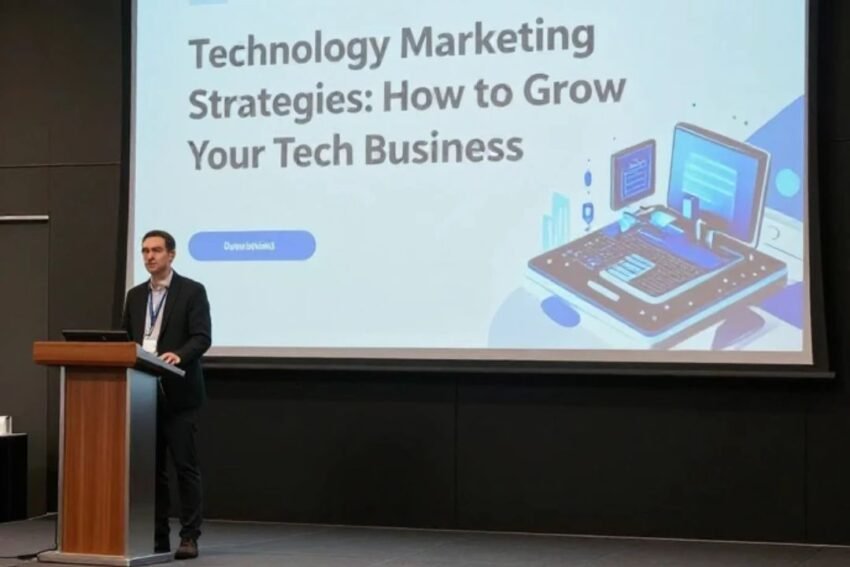
Technology has changed the way businesses operate, communicate with customers, and compete in the global market. From software companies and IT service providers to artificial intelligence startups and technology platforms, businesses today need more than a good product to succeed. They also need an effective marketing strategy that can communicate the value of their technology to the right audience.
This is where technology marketing becomes important. Technology marketing combines traditional marketing principles with digital tools, data, automation, content, search engine optimization, social media, and other modern techniques to promote technology products and services.
For technology businesses, marketing can be challenging because products are often complex. Customers may not immediately understand how a software platform, cloud service, cybersecurity solution, or artificial intelligence tool can solve their problems. A strong marketing strategy makes these technologies easier to understand while building trust and encouraging potential customers to take action.
In this guide, we explore the most effective technology marketing strategies and explain how businesses can use them to increase visibility, generate leads, build customer relationships, and achieve sustainable growth.
What Is Technology Marketing?
Technology marketing is the process of promoting technology-based products, services, solutions, and businesses to a specific target audience. It can include marketing for software, hardware, cloud computing, cybersecurity, artificial intelligence, IT services, SaaS platforms, mobile applications, and other technology solutions.
Unlike some traditional industries, technology companies often need to explain complicated products in simple terms. Customers want to know not only what a technology does but also how it can save time, reduce costs, improve productivity, increase security, or solve a specific business problem.
Effective technology marketing therefore focuses on both education and promotion.
For example, instead of simply advertising a cloud software platform, a company could publish an article explaining how cloud technology can help small businesses reduce infrastructure costs. This approach provides useful information while introducing the company’s solution to potential customers.
Why Technology Marketing Is Important
The technology industry is highly competitive. New companies and products enter the market regularly, making it difficult for businesses to capture attention.
A strong technology marketing strategy can help companies:
- Increase brand awareness
- Reach potential customers
- Generate qualified leads
- Improve search engine visibility
- Build credibility and trust
- Explain complex products
- Increase website traffic
- Improve customer engagement
- Support sales teams
- Develop long-term customer relationships
Marketing also allows technology companies to differentiate themselves. Two businesses may offer similar services, but the company that communicates its benefits more clearly can have an advantage.
1. Define Your Target Audience
One of the first steps in successful technology marketing is understanding the target audience.
A technology product should not be marketed to everyone. Instead, businesses should identify the people or organizations most likely to benefit from their solution.
Consider factors such as:
- Industry
- Company size
- Job role
- Location
- Business challenges
- Budget
- Technology requirements
- Purchasing behavior
For example, a cybersecurity company may target small businesses, enterprise organizations, government agencies, or financial institutions. Each audience has different concerns and requirements.
Creating buyer personas can make marketing campaigns more focused. A buyer persona describes an ideal customer and includes information about their goals, problems, preferences, and purchasing decisions.
2. Build a Strong Technology Brand
Branding plays an important role in technology marketing. Customers need to recognize and trust a company before they are willing to purchase its products or services.
A strong technology brand should have:
- A clear identity
- Consistent visual design
- A professional website
- A clear value proposition
- Consistent messaging
- Useful educational content
Your brand message should answer a simple question: Why should customers choose your technology instead of another solution?
Avoid using unnecessary technical language. Instead, explain the practical value of your product.
For example, rather than saying that your platform uses an advanced machine-learning architecture, explain how it helps businesses analyze information faster and make better decisions.
3. Use SEO to Increase Organic Visibility
Search engine optimization is one of the most valuable digital marketing strategies for technology companies.
Potential customers frequently search online before purchasing technology products. They may search for solutions, comparisons, reviews, tutorials, pricing information, or specific features.
A technology business can attract these users by creating search-optimized content.
Important SEO activities include:
- Keyword research
- On-page optimization
- Technical SEO
- Internal linking
- Content creation
- Website speed optimization
- Mobile optimization
- Backlink development
- Search intent analysis
Your primary keyword, such as technology marketing, should appear naturally in important areas of your content, including the title, introduction, headings, and relevant body sections.
However, keyword stuffing should be avoided. Search engines increasingly focus on helpful and relevant content rather than pages that simply repeat keywords.
4. Create High-Quality Technology Content
Content marketing is particularly effective for technology businesses because customers often need education before making a purchase.
Useful content can include:
- Blog posts
- Tutorials
- Industry guides
- Case studies
- White papers
- Research reports
- Videos
- Infographics
- Product comparisons
- Frequently asked questions
For example, a cloud computing company could create articles about cloud security, cloud migration, data storage, and infrastructure management.
The goal should be to answer real customer questions. Helpful content can attract search traffic, establish expertise, and move potential customers further through the buying journey.
5. Simplify Complex Technology
One of the biggest challenges in technology marketing is explaining complicated products.
Technical teams often use industry-specific language that ordinary customers may not understand. Marketing should translate technical features into practical benefits.
Instead of focusing only on features, explain outcomes.
For example:
Feature: Automated data processing.
Benefit: Businesses can process large amounts of information faster without performing repetitive tasks manually.
This approach helps customers understand why the product matters.
A simple explanation can often be more powerful than a long technical description.
6. Use Social Media Marketing
Social media provides technology companies with opportunities to build communities and communicate directly with customers.
Different platforms can support different marketing objectives. Businesses can use social media to:
- Share educational content
- Promote new products
- Publish company updates
- Share customer success stories
- Answer questions
- Build professional communities
- Increase website traffic
- Engage with industry discussions
Technology companies should focus on platforms where their target audience is active rather than trying to maintain a presence everywhere.
For B2B technology companies, professional networking platforms can be particularly useful for reaching decision-makers, industry professionals, and business leaders.
7. Invest in Video Marketing
Video is another powerful tool for technology marketing because it can demonstrate products more effectively than text alone.
Technology businesses can create:
- Product demonstrations
- Tutorials
- Explainer videos
- Customer interviews
- Webinars
- Company presentations
- Product announcements
- Educational videos
For software companies, screen-recorded demonstrations can show customers how a product works.
Short educational videos can also help introduce complex concepts to audiences who prefer visual content.
8. Use Email Marketing
Email marketing remains useful for technology businesses, particularly for lead nurturing.
Not every website visitor is ready to purchase immediately. Some people may need additional information before making a decision.
Businesses can use email campaigns to send:
- Product updates
- Educational articles
- Industry news
- Special offers
- Case studies
- Product guides
- Webinar invitations
Personalization can make email campaigns more effective. Instead of sending the same message to every subscriber, businesses can create different campaigns based on customer interests and behavior.
9. Develop Technology-Focused Landing Pages
Landing pages are important for converting visitors into leads or customers.
A good technology landing page should clearly communicate:
- What the product does
- Who it is designed for
- The main customer benefit
- Important features
- Evidence of reliability
- Frequently asked questions
- A clear call to action
Avoid overwhelming visitors with excessive information. The page should guide them toward one primary action, such as signing up, requesting a demonstration, downloading a guide, or contacting the sales team.
10. Use Case Studies to Build Trust
Technology products can sometimes be difficult to evaluate before purchase. Case studies provide evidence that a solution works in real-world situations.
A strong case study can explain:
- The customer’s original problem
- The technology solution
- How the solution was implemented
- The results achieved
- Lessons learned
For example, a SaaS company could explain how its software helped a business reduce administrative work or improve customer service.
Real-world examples make technology products easier to understand and can reduce uncertainty during the purchasing process.
11. Use Data and Analytics
Successful technology marketing should be based on data rather than assumptions.
Businesses can track metrics such as:
- Website traffic
- Search rankings
- Conversion rates
- Lead generation
- Email engagement
- Social media engagement
- Customer acquisition costs
- Return on marketing investment
Analytics can show which campaigns are generating results and which areas need improvement.
For example, if a technology company’s blog receives thousands of visitors but generates very few leads, the company may need to improve its calls to action, landing pages, or lead-generation strategy.
12. Use Artificial Intelligence in Marketing
Artificial intelligence is becoming increasingly important in digital marketing.
Technology companies can use AI-powered tools to support activities such as:
- Customer segmentation
- Data analysis
- Content planning
- Chatbots
- Personalization
- Customer support
- Marketing automation
- Predictive analysis
However, AI should support human marketing teams rather than completely replace them. Human expertise remains important for strategy, creativity, brand voice, fact-checking, and customer relationships.
13. Build Authority Through Thought Leadership
Technology buyers often want to work with companies that demonstrate expertise.
Thought leadership can help businesses establish authority in their industry.
Companies can publish:
- Expert opinions
- Industry research
- Technology forecasts
- Original studies
- Expert interviews
- Detailed guides
- Educational webinars
For example, a company specializing in artificial intelligence could publish research about emerging AI applications in its industry.
Consistent expertise can help a technology brand become a trusted source of information.
14. Optimize the Customer Experience
Marketing does not end when a customer makes a purchase.
The customer experience can influence retention, referrals, reviews, and future sales.
Technology companies should make it easy for customers to:
- Understand the product
- Get started
- Find documentation
- Contact support
- Resolve problems
- Upgrade services
- Provide feedback
A positive customer experience can become an important marketing advantage because satisfied customers may recommend the company to others.
15. Measure and Improve Your Strategy
Technology marketing should be treated as an ongoing process.
A strategy that works today may not produce the same results in the future. Search behavior, technology, customer expectations, and competitors can all change.
Businesses should regularly review performance and ask:
- Which channels generate the best leads?
- Which content receives the most engagement?
- Which keywords attract valuable visitors?
- Which campaigns generate sales?
- Where are potential customers leaving the buying process?
- What can be improved?
Testing different headlines, landing pages, content formats, advertisements, and calls to action can help identify better-performing approaches.
Common Technology Marketing Mistakes to Avoid
Even well-established technology companies can make marketing mistakes.
Some common problems include:
Using Too Much Technical Language
Customers may not understand highly technical explanations. Focus on benefits and practical outcomes.
Marketing Without a Clear Audience
Trying to reach everyone can make campaigns less effective. Define a specific audience before creating marketing content.
Ignoring SEO
A great website may receive little organic traffic if it is not optimized for search engines.
Focusing Only on Product Features
Features are important, but customers usually care more about how those features solve their problems.
Not Tracking Results
Without analytics, it becomes difficult to determine whether marketing investments are producing results.
Inconsistent Branding
Different messages across websites, social media, advertisements, and sales materials can weaken brand recognition.
The Future of Technology Marketing
The future of technology marketing will likely become more data-driven, personalized, automated, and customer-focused.
Artificial intelligence, automation, advanced analytics, voice technologies, personalization, and emerging digital platforms are expected to influence how technology companies communicate with customers.
At the same time, trust will remain extremely important. Customers want accurate information, transparent communication, strong security, and reliable support.
Technology companies that combine innovation with useful content and genuine customer value will be better positioned to compete in an increasingly crowded marketplace.
Conclusion
Technology marketing is an essential part of growing a modern technology business. A successful strategy goes beyond advertising a product. It involves understanding the target audience, creating useful content, improving search visibility, building a trustworthy brand, using digital channels, and continuously measuring results.
From SEO and content marketing to social media, email campaigns, video, analytics, and artificial intelligence, technology businesses have many tools available to reach potential customers.
The most effective approach is to focus on customer needs first. When technology companies clearly explain how their products solve real problems, provide valuable information, and build long-term relationships, marketing becomes more than a promotional activity—it becomes a powerful engine for sustainable business growth.