
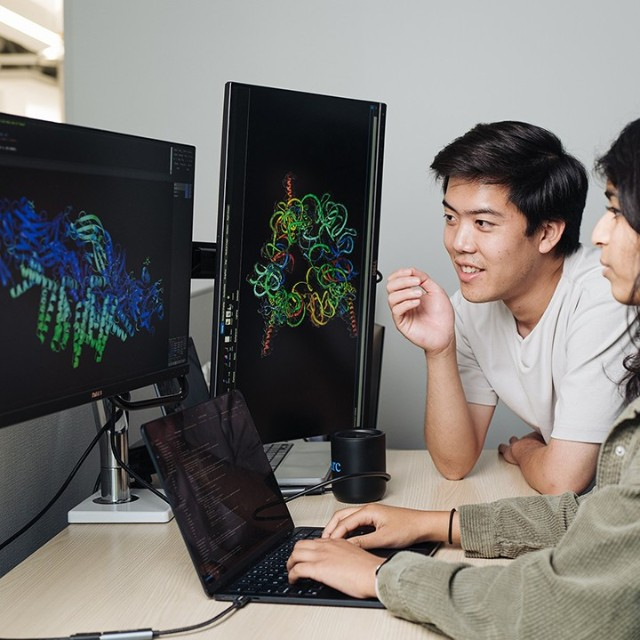
LONDON, August 10, 2026: AI technology has already begun to evolve from being used exclusively for purely digital purposes into being applied in industries that operate on the physical plane. Biological research can be seen as one of those industries. Advanced AI will allow researchers to receive more effective assistance when designing and analyzing biological systems.
The development of AI-driven biological system design can lead to many positive outcomes. It will allow researchers to find more effective drugs faster, study infectious diseases in more detail, and discover ways to combat bacteria that are resistant to existing antibiotics.
AI Is Moving Into a New Phase of Biological Research
Biological research has traditionally relied on experiments carried out in labs, mathematical modeling, databases and the knowledge of scientists. Scientists have become increasingly capable of developing more advanced techniques that help study proteins, genes, cells and microorganisms.
Nowadays, artificial intelligence is making yet another step forward in the process.
Modern AI algorithms are able to analyze vast amounts of data and reveal relations that might be hard for a person to find independently. In biological research, this includes genetic analysis, structure prediction, protein interaction and candidate selection among other things.
The value of such systems does not only reside in generating information, but also in helping scientists design biological systems.
Medical benefits
Another argument for using AI in biological design is that it can help advance medicine.
Creating new drugs takes a lot of time and costs a lot of money. Scientists need to identify targets, come up with possible solutions, do lab work, and pass several stages of trials.
AI could help with all these steps.
For example, with its capability of analyzing vast amounts of biological and chemical data, AI could help scientists identify good targets. Additionally, it could help analyze interactions of biological molecules, thus helping scientists focus on the most promising targets.
It does not mean that AI will replace scientists and there will be no need for laboratory testing at all. The biological systems are very complex, and any assumptions made by computers have to be verified in reality.
At the same time, AI could become a very helpful research assistant.
With the help of this technology, scientists will be able to ask better questions, explore more possibilities and plan more interesting experiments.
In case these capabilities continue to develop, they will help advance treatment of certain illnesses which currently lack proper treatment.
Infectious Diseases
A further use of this type of technology is with infectious diseases.
Scientists who study viruses, bacteria, and other infectious agents usually have the requirement of understanding how biological systems evolve, react, and interact under different circumstances. AI can provide analysis of the data gathered from their research and discover trends that may be otherwise impossible to notice.
Such knowledge will help increase the scientific comprehension of the emergence and spreading of infectious diseases.
AI may assist in exploring various therapeutic options in the research of scientists. For instance, they could model different biological interactions in the computer before conducting their laboratory experiments.
The applications of this technology go beyond the current challenges with infectious diseases. It can assist in preparing for future dangers as well.
Increasing Problem of Antibiotic Resistance
Another field in which AI-aided research may have some benefits is antimicrobial resistance.
These bacteria can become resistant to drugs that used to effectively fight them. It poses a significant problem for health care organizations since infections that used to be easily treated become progressively more complicated.
Hence, scientists search for new antibiotics and other ways to treat bacterial infections.
In this case, AI may be useful as it would be able to analyze vast amounts of information about biological and chemical processes.
It is possible that scientists will be able to discover molecules that may become potential medications through computers and learn more about biological processes connected to the bacteria’s resistance.
It is important to mention that the point is not to rely on AI in creating medicine but rather decrease the number of possible candidates that need to be analyzed.
Why Greater Capability Brings New Risks
The potential advantages of biological design by AI assistance are great, but any advances bring risks as well.
When an AI tool is no longer only able to analyze already available data but is also able to design biological systems, any mistakes made or any misuses could have bigger impact.
It doesn’t mean that all biological AI tools are necessarily risky.
What it means, however, is that the ability of these tools needs to be matched with safety.
An AI designed for use in legitimate medical research could easily be used for other purposes. In addition, predictions about biological processes done by the model could turn out to be incorrect because the output from the model might be trusted too much without being experimentally verified.
And it gets even trickier, when the technology becomes increasingly easy to access.
While biological research usually required specific facilities and expertise before, now computational tools might make biological designs possible.
Governance Needs To Adapt As Quickly As Technologies Do
The one of the key issues about technologies of AI and biotechnologies is the rate of their development.
AI models could be developed fast enough while regulatory frameworks, scientific approaches, and organizational policies could not catch up with this pace.
And that might create a problem.
In case when the systems using AI acquire new biological features quicker than the governing bodies manage to keep up with them, people will be solving problems after they occur.
Proper regulation, therefore, should be predictive.
There are certain duties for governments, research institutes, technology companies and biotechnology organizations. And no party is capable to deal with risks on its own.
For example, technology companies creating AI models could provide them with proper safety tools. Scientists could apply proper methods of doing research. Laboratories could maintain proper security conditions while conducting experiments.
The Role of Scientists
The scientists will continue to be integral to making sure that the development of AI-assisted biology is done responsibly.
AI technologies are capable of analyzing information at high speed, yet the role of the scientist is needed to verify whether the output of the system is relevant and correct and whether further study should be done on it.
It is crucial that the scientists do not automatically take the output from computers to be true without further evaluation.
It becomes particularly vital in biology, since even the slightest mistake in the prediction could cause big problems during the experiment itself.
Review mechanisms could be introduced by scientific organizations as a way to examine potential dangers that might be associated with the projects based on the use of advanced biological design tools.
Another aspect that will be critical in this case is education.
Scientists are increasingly becoming to rely not just on the methods of biology but also on the capabilities of AI technologies and vice versa.
Collaboration Is Becoming Essential
The relationship between artificial intelligence and biology that is developing in the current period cannot be dealt with by one industry alone.
The AI industry understands computation. The biologists understand biological processes. Medical researchers understand medical needs. Governments understand regulation. Security experts can help envision misuse scenarios.
Combining all these points of view could result in better control measures.
Collaboration will also help in avoiding any unnecessary fears.
The public debate on the subject of AI and biology sometimes tends to take an extreme direction very soon. However, although real dangers cannot be overlooked, exaggerations can make it difficult to distinguish scientific concerns from fantasy.
There must be a balanced approach to this issue.
AI will provide great tools for medicine and biological research, but they need to be controlled appropriately.
Future of AI and Biology
The interaction between artificial intelligence and biology will become one of the most significant technological areas in the years ahead.
Its potential is huge.
AI can enable scientists to find new drugs, study infectious diseases, learn more about biological processes, and develop methods for addressing antimicrobial resistance. It would allow some scientific research to become more effective and efficient.
However, such opportunities come with obligations.
Designing biological systems means that the development of artificial intelligence can no longer be regarded exclusively as a software problem. It becomes associated with laboratory safety, public health, biotechnology policies, and international security.
It necessitates a different model of governance.
Scientists, tech companies, governments, and international organizations will have to collaborate more often as artificial intelligence develops.
Conclusion
The growing capacity of artificial intelligence to aid in biological design is an important milestone in the evolution of modern science. This proves that AI moves beyond information analysis to help researchers generate and examine various new ideas in the physical world.
The possible benefits are many. The quick discovery of medicines, better understanding of infectious diseases and new ways of combating antibiotic resistance might lead to improvements in healthcare and science.
However, increasing ability entails increasing responsibility.
The initial success cannot be taken as a proof that AI is now capable of generating hazardous human viruses when it is requested. Instead, it should be regarded as the indicator of the increasing sophistication of AI-assisted biological design.
This makes the issue of responsible governance even more important.
The main issue of concern for society will be finding the way to stimulate innovation without posing unacceptable threats. This balance will be achieved only if scientists, AI developers, biotechnology firms and regulators act jointly rather than individually.