
It appears that the Middle East is once again entering an unpredictable period of uncertainty due to the military actions taken by the United States and Israel against Iran on February 28. The two countries engaged in a series of significant attacks, which increased the tension between them significantly and started another stage of their conflict that could potentially lead to a war in the whole region.

According to the president of the United States Donald Trump, the United States began “major combat operations” against Iran, and Israel took part in attacks on Iranian targets along with the United States. This move transformed several years of confrontation, sanctions, and indirect warfare into an openly military one.
As a result of this situation, Iran retaliated, the level of security in the region decreased, and foreign governments tried to prevent this military action from spreading from Iran and Israel. In addition, a report emerged that Iran’s Supreme Leader Ayatollah Ali Khamenei was assassinated during this operation.
This event became one of the most significant for Iran’s modern history. Not only did his death create a significant leadership void, but the country faced military and economic challenges as well.
The son of Ayatollah Khamenei, Mojtaba Khamenei, was made a new supreme leader of Iran. His succession in the country’s politics provided some sort of continuity, but left doubts about how the country would react to this challenge.
A New Phase in the US-Israel-Iran Conflict
These strikes were not just another case of attack exchange between the rival regions. They became a turning point in the relations between the parties shifting from long-term confrontation to military conflict with the participation of the US.
Iran, Israel, and the USA had been involved in complicated relations of military threats, proxy conflicts, sanctions, nuclear talks, and attacks on their interests for years. Israel was constantly warning about the Iranian threats, whereas Iran kept saying that it had the right to protect its sovereign rights and national interests.
The entrance of the US in the military conflict made a complete change in the balance of power within it.
The active participation of Washington in the military conflict raised the probability that Iran may attack American bases, shipping and strategic infrastructure in the region. On the other hand, Israel was also threatened by Iranian missiles and drones attacks.
This conflict very quickly expanded the borders of Iran and Israel and affected other regional countries such as Gulf states, Iraq, Syria and others.
Khamenei’s Assassination Changes Iran’s Political Landscape
Among the major events that took place throughout the conflict is the reported assassination of the country’s leader, Ayatollah Ali Khamenei.
The man held the position of the supreme leader of Iran since 1989 and was the nation’s major political and religious figure. The role provided him with the necessary influence over Iran’s military, its foreign affairs and strategic decision-making.
With Khamenei’s death during US-Israeli strikes, there emerged a unique political situation in Iran.
To prevent the country from lacking a proper leadership for a considerable amount of time, the Iranian government decided to nominate his son, Mojtaba Khamenei as a successor.
The nomination of the young Mojtaba drew attention to the country from the whole world due to his close ties to Iran’s political and religious elite. Moreover, Mojtaba’s succession became one of the key points of analysis for the country’s further development strategy and tactics.
The problem faced by Iran was quite severe: it should have preserved the country’s internal stability while dealing with the military strikes and negotiations with the US at once.
On the part of America and Israel, the succession process became another strategic issue as well.
Ceasefire Offers a Temporary Opening
Regardless of how intense the struggle became, diplomacy managed to bring about a brief opening.
It is on April 8 that both the US and Iran agreed to a two-week truce. It came at a critical moment following weeks of tensions between the two and made room for diplomatic initiatives.
A truce in a war of this magnitude is never easy. It requires that both parties weigh their military aims against political pressures and public expectations.
This was an opportunity for Iran to evaluate the consequences of the strike and re-evaluate its strategic position. On the other hand, this period could allow the US to see if there was an opportunity for diplomacy beyond what force could provide.
It also allowed neighboring countries to seek a broader diplomatic resolution of the situation.
One such country was Pakistan.
Pakistan Hosts Historic US-Iran Talks
Historic Meeting of US and Iran in Pakistan
In April, Pakistan became the venue for the first-ever direct meeting between representatives of the USA and Iran in 47 years.
Such a meeting was important since the direct communication between the two parties had been minimal for decades. It was a considerable success despite the fact that no agreements were reached at that session.
Though no final agreement has been reached, negotiations have not fallen through either.
This fact is significant.
The failure of reaching a breakthrough means that many disputes have still not been resolved. Nevertheless, the continuity of the negotiations means that the efforts of diplomacy have not come to nothing.
The involvement of Pakistan is determined by its interest in maintaining the regional stability. Being an adjacent Muslim state that has connections with both Western and Middle Eastern countries, Islamabad had a great interest in fostering dialogue.
It is clear that the lengthy war between the USA and Iran could bring serious repercussions for Pakistan.
Switzerland Becomes the Next Diplomatic Venue
In June, diplomacy continued with high level negotiations between US and Iranian officials in Switzerland on June 20.
These negotiations were carried out against the backdrop of an initial agreement that would help pave the way for an end to the war. This gave hope that, at least one day in the future, the conflict would find its way from the battlegrounds to the negotiation tables.
These negotiations were significant in the sense that neither of the parties seemed ready to use military means alone in solving the conflict.
Iran was looking for assurances about its sovereignty, security and future economic prosperity while the US was looking for assurances about Iran’s behavior in the region.
There were complex issues of sanctions, energy and maritime security as well.
An initial agreement could not solve all these issues, but it would provide the basis for future negotiations.
Hormuz Becomes the Next Flashpoint
The diplomatic breakthrough was again put into jeopardy owing to events unfolding regarding the Strait of Hormuz.
The crucial maritime route is one of the key shipping routes globally since huge amounts of global energy resources move through it.
Any disruption in the strait will have immediate impacts in the international oil market and beyond.
With the escalation of tensions in the region, the threat of a new war became more and more serious.
Following the attacks against U.S. vessels in the region, the U.S. attacked Iran on July 8. Iran responded to the U.S., raising the tensions significantly.
The renewed war showed the instability of the diplomatic process.
Despite all diplomatic efforts, any security incident could jeopardize the process.
The Human Cost of the Conflict
Underneath the diplomatic talks and military activities is the human impact of the conflict.
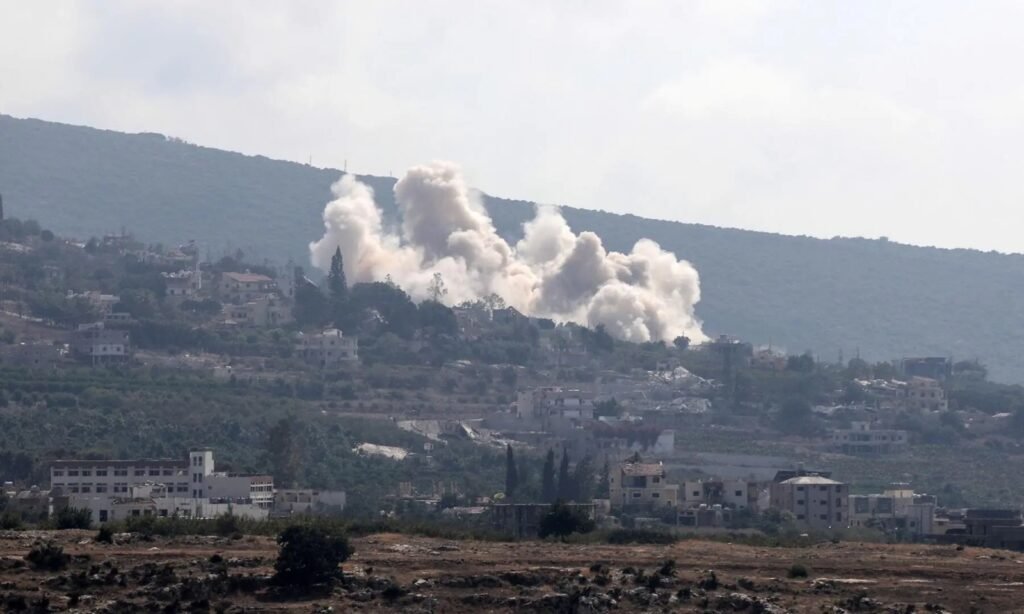
Aerial bombardment, missile launches and military activities may not only lead to destruction of property and damage infrastructure but also compel the civilian population to flee to safer locations.
These psychological effects may endure even after the hostilities have ceased.
Residents of regions that have been attacked live under the threat of insecurity, job losses, and lack of basic necessities. Hospitals may find themselves overburdened with patients; disruptions in electricity, transportation and communication may create difficulties for the population.
The regional impact of such an occurrence can be devastating too.
Regional countries neighbouring conflict zones might have to deal with refugees and other such issues related to security and economics.
With the duration of military operations increasing, the management of these consequences becomes all the more difficult.
The Risk of a Wider Regional War
Perhaps the most worrying aspect of the conflict is the potential for its spread.
The Middle East already has many unresolved conflicts and rival alliances. An open conflict between the US and Iran could bring more military players into the equation.
An attack on American military forces could provoke an attack by America. An attack by Iran could target Israel or other allies. Attacks by the Israeli military could provoke Iran or other allies of Iran.
On the other hand, any attacks on commercial shipping would easily escalate the military conflict into an international economic disaster.
This is why international governments have every reason to push for restraint.
Diplomacy Remains the Only Sustainable Path
Events that have taken place since February 28 have confirmed both the destructive capacity of military escalation and the necessity of diplomacy.
The ceasefire in April has proven that it was possible to come to an agreement even at the peak of the conflict. Pakistan talks, Switzerland negotiations, and Qatar summit have proven that direct communication is still possible even in spite of serious political disagreements.
However, temporary agreements will not help to solve the problem.
Permanent peace in the area will require some security guarantees, verification measures and the possibility of achieving certain success through diplomacy for both parties.
Otherwise, it will be impossible to establish any kind of permanent peace in the area; it will continue oscillating between war and negotiations.
The recent clashes in the Strait of Hormuz have once again proven how quickly any kind of progress achieved can disappear.
In the interest of the civilians living in the area and the economy of the rest of the world, it is important to prevent the next escalation and establish conditions for permanent peace.
The return of war to Iran has completely changed the picture of the regional security. The assassination of Khamenei, the appointment of Mojtaba Khamenei, the ceasefire, talks between the United States and Iran and new clashes in the Hormuz Strait are some examples.
It will be up to the people from Washington, Tehran and Jerusalem and other international mediators to decide what is going to happen next.
